


This post may contain affiliate links. If you make a purchase through one of these links, I earn a small commission at no extra cost to you. Read my full disclosure here.
Finding high-demand, low-competition Etsy niches is less about discovering a secret category and more about finding a specific buyer need that demand has outgrown. You want proof that people are searching and buying, plus evidence that the sellers currently serving them are not impossible to compete with.
I have generated more than $303,000 in Etsy revenue since opening my print-on-demand shop in October 2022. Niche and keyword research has been one of the biggest reasons I have been able to create products people were already looking for instead of designing first and hoping for sales later.
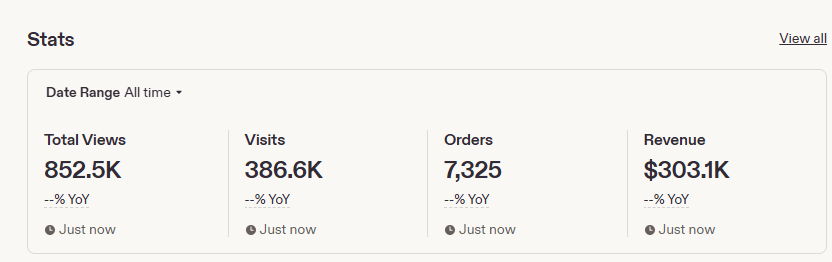
This guide will show you the process I use to move from a broad idea to a more specific Etsy niche, check its demand, study its competition, and decide whether it deserves your time.
What Is a Low-Competition Etsy Niche?

A niche is a focused segment of a larger market. On Etsy, that focus might come from the buyer, occasion, profession, hobby, style, product, or a combination of several of those things.
“Teacher gift” is broad. A gift for a specific type of teacher, school milestone, subject, or personality is more focused. “Dog shirt” is broad. A product created for one breed, one type of dog owner, or one specific occasion gives you a more defined customer and search intent.
Low competition does not mean nobody else is selling the product. An empty search result can be a warning that few buyers want it. The opportunity is the overlap between proven demand and competition you can realistically challenge.
Your goal is not to find an empty corner of Etsy. Your goal is to find buyers who are not being served particularly well yet.That distinction matters because a keyword with very few competing listings can still be a terrible choice if it has almost no searches. A high-volume term can be equally unhelpful when established shops dominate every result and every product looks interchangeable.
Why High Demand and Low Competition Need to Be Measured Together

Demand tells you that buyer interest exists. Competition tells you how difficult it may be to earn visibility and sales from that interest. Neither number gives you the complete answer on its own.
Etsy now gives sellers direct search and listing data through Marketplace Insights. According to Etsy’s Marketplace Insights documentation, sellers can see searches and competing listings from the previous 30 days. Etsy currently includes 15 keyword searches per week for free, while Etsy Plus subscribers receive unlimited searches.
If the interface is new to you, my walkthrough of how to use Etsy Marketplace Insights shows where to find the data and how to turn it into useful product research.
That makes Marketplace Insights useful for comparing demand and supply inside Etsy itself. Third-party estimates still have a place, but the closer your evidence is to actual Etsy buyer behavior, the better.
I also use eRank for keyword research and E-Hunt to study competitors and individual listings. My full comparison of eRank and Etsy Marketplace Insights can help you decide how the two fit together without paying for every tool under the sun.
I also have a step-by-step guide to using eRank for Etsy print on demand if you want to see how I approach the tool as an active seller.
How to Find High-Demand, Low-Competition Etsy Niches

1. Start With a Buyer, Occasion, Interest, or Style
Do not start by asking, “What should I sell on Etsy?” That question is so broad that it usually leads to generic answers such as mugs, shirts, planners, or wedding gifts.
Start with a person or moment you understand. Think about professions, family roles, hobbies, sports, identities, life changes, celebrations, and very specific interests. A familiar audience gives you language, jokes, frustrations, and gift occasions that a generic seller may overlook.
You can also start with a style. Retro, minimalist, gothic, preppy, maximalist, and hand-drawn are not niches by themselves, but a style can make a familiar product feel specific when it connects naturally with the buyer.
This is where your creativity matters. Research tells you where demand may exist. It does not replace the original point of view that makes someone choose your design instead of the other fifty products on the page.
2. Build More Specific Product Phrases
Once you have a broad starting point, create phrases that combine the buyer or occasion with a product. You can narrow the idea with a profession, recipient, milestone, location, hobby, visual style, or product format.
For example, a broad interest can become a gift for a specific person within that community. A major holiday can become a smaller moment within the season. A popular profession can become a particular role that rarely gets products made specifically for them.
You are looking for the language a buyer would type when they already have a fairly clear picture of what they want. Specific phrases often have less total volume than broad terms, but the person searching may be much closer to purchasing.
If you are still deciding which products fit your audience, my guide to the best print-on-demand products to sell on Etsy will help you connect your niche research to a product that makes sense.
3. Use Etsy Autocomplete for Buyer Language
Type your broad phrase into Etsy’s search bar and watch the suggestions that appear. Add a product, recipient, or descriptive word and repeat the process. Autocomplete is useful because it helps you see how shoppers phrase related searches.
Do not treat every autocomplete suggestion as proof of strong demand. Use it as a source of buyer language and possible research directions, then validate those phrases with more data.
I once found a phrase through Etsy autocomplete that became part of a product that sells consistently throughout the year. That same keyword did not appear in the third-party database. It was a good reminder that one database should never make every decision for your shop.
4. Compare Searches With Competing Listings
Take the strongest phrases into Marketplace Insights or your preferred keyword tool. Look at search activity and the number of listings competing for the phrase.
There is no universal competition number that makes a keyword good. A term with a few thousand competing listings can still be difficult if demand is tiny. A larger market can still be viable if demand is strong and the existing results leave room for a better product.
Compare related phrases instead of judging one number in isolation. If two keywords express similar intent but one has a healthier relationship between searches and listings, investigate that one first.
Marketplace Insights uses a rolling 30-day window, so timing matters. A seasonal phrase may look wonderful during its peak and nearly disappear later. Save the date of your research and ask whether the buyer will still be shopping by the time you design, list, and market the product.
5. Inspect the First Page Like a Buyer
Numbers can identify a possible opening. The actual Etsy results show you what you would need to compete against.
Search the exact phrase and study the first page. Look at the products, visual styles, price range, personalization options, reviews, shop sales, photos, and how closely the results match what you searched.
If the page is full of polished products from established shops with thousands of reviews, the keyword may be harder than the listing count suggests. If smaller shops are earning prominent positions, the results are repetitive, or the products only loosely match the query, there may be room for a stronger idea.
Also look for gaps in execution. Perhaps every result uses the same phrase, color palette, product type, or generic clip art. The opening may not be an entirely new niche. It may be a more thoughtful interpretation of a niche that already has buyers.
6. Look for Evidence of Recent Buyer Activity
Demand should leave evidence. Check recent reviews on relevant products and shops. Study the bestseller badges and any visible buying signals without treating a single badge as a guarantee.
Your own Shop Stats are another valuable source. Etsy’s official search guidance recommends reviewing the search terms that bring buyers to your listings and comparing weaker listings with your stronger performers. A phrase that has already produced a visit, favorite, or sale for your shop deserves attention, even when a third-party tool estimates modest volume.
This is why I keep coming back to real customer behavior. A sale is stronger evidence than a colorful score inside a research tool.

DONE-FOR-YOU ETSY RESEARCH, DELIVERED WEEKLY
Stop Guessing What to List Next
Every week, get one in-demand Etsy keyword with low competition, a video breakdown, and nine products already selling for that keyword. This done-for-you research saves you hours and gives you real Etsy market evidence that AI cannot currently produce on its own.
Included with Freedom Unclocked, or available separately for $9 per month.
See What Is Inside the Opportunity Report
Start My $9/Month Report7. Check Whether You Can Create a Better Product
A promising keyword is not enough. You still need an idea that earns the click and delivers what the buyer hoped to find.
Ask yourself what you can improve. You might create a more specific design, a better composition, a stronger mockup, clearer personalization, a product variation the market is missing, or messaging that sounds like it came from someone inside the community.
This is where keyword research and design work together. A relevant title may help Etsy understand a listing, but Etsy’s current explanation of how Etsy search works also describes ranking factors such as listing engagement, conversion, customer service, and listing quality. Getting matched to a search is only the first part. Your product still has to persuade a buyer to click and purchase.
Use all 13 relevant tags, choose the most specific category and attributes available, and write your listing for the person searching. My complete guide to using Etsy tags for search visibility explains how those pieces work together once you have selected the niche.
8. Test a Small Product Group Before Going All In
You do not need fifty listings to learn whether an idea has potential. Start with a small, intentional group that explores the same buyer need through several design or product angles.
Give Etsy enough information to match the listings, then watch what happens. Track impressions, visits, favorites, carts, and sales. If you receive impressions but few clicks, examine the product, thumbnail, price, and promise. If you receive almost no impressions, revisit the keyword and listing relevance.
Do not renew weak listings endlessly for a temporary search bump. Etsy says renewed listings can receive a smaller, temporary boost, but repeatedly renewing for that boost is not an effective optimization strategy. Improve the listing or move your time to a stronger opportunity.
When something begins working, expand with purpose. Create complementary designs, related products, seasonal variations, or adjacent phrases that serve the same buyer. That is how a niche becomes a useful product line instead of a random pile of listings.
How to Know When a Niche Is Too Competitive
A niche is probably too difficult for your current shop when the search is broad, the first page is dominated by established sellers, paid placements take over the most visible space, and the products are already highly polished and differentiated.
That does not mean you can never sell there. It means you need a clearer angle than the phrase itself gives you.
Niche down by buyer, occasion, profession, hobby, product, or style. Then research the new phrase from the beginning. Do not add random adjectives simply to manufacture a low competition score. The narrower phrase still needs to describe something a real person wants.
If you have an established shop, your answer may also be sitting inside products that already sell. Look at the audiences, occasions, visual elements, and search terms connected to your winners. My guide on scaling an Etsy print-on-demand shop explains how to build from evidence instead of starting over every week.
Common Etsy Niche Research Mistakes
Choosing Low Competition Without Confirming Demand
A nearly empty search page can feel exciting. Sometimes it is empty because shoppers are not interested. Confirm demand before you celebrate the lack of competition.
Copying a Bestseller Instead of Studying the Buyer
A bestseller proves that one product connected with buyers. It does not give you permission to recreate its design. Study the customer, occasion, language, and unmet needs, then create your own solution.
Trusting One Keyword Tool Completely
Every tool has limitations. Compare Etsy’s own data, third-party estimates, live results, Shop Stats, and recent buyer activity. When the sources disagree, that is a reason to investigate, not a reason to choose whichever number you like best.
Chasing Trends Too Late
A keyword can look great today and peak before your product gains traction. Research seasonal timing and give yourself enough lead time to design, list, and market the product. My current Etsy seller trend reports can help you spot broader buyer shifts before turning them into specific product research.
Creating Too Much Before Testing
Making dozens of designs before receiving any market feedback turns one uncertain idea into a large time investment. Test a focused group, read the data, and earn the right to expand.
A Simple Etsy Niche Validation Checklist
Before I commit serious time to an Etsy niche, I want to answer a few practical questions. Are buyers searching for the phrase? Are there recent signs of purchasing activity? Does the relationship between searches and competing listings look promising compared with related phrases? Can a smaller or newer shop appear on the first page? Do the existing products leave room for a more specific design, better presentation, or stronger offer? Can I create several original products for this audience without repeating the same idea?
If the answers are mostly yes, the niche is worth a controlled test. If demand is unclear or the first page is nearly impossible to challenge, keep researching.
You can absolutely do this process yourself. You can also spend hours moving among Etsy, research tools, competitor listings, and spreadsheets before you feel confident enough to create anything.
If you would rather start with the research already done, the Opportunity Report gives you one in-demand Etsy keyword with low competition every week, a video breakdown, and nine products already selling for that keyword. It is the kind of current Etsy market evidence AI cannot reliably produce on its own.
DONE-FOR-YOU ETSY RESEARCH, DELIVERED WEEKLY
Stop Guessing What to List Next
Every week, get one in-demand Etsy keyword with low competition, a video breakdown, and nine products already selling for that keyword. This done-for-you research saves you hours and gives you real Etsy market evidence that AI cannot currently produce on its own.
Included with Freedom Unclocked, or available separately for $9 per month.
See What Is Inside the Opportunity Report
Start My $9/Month ReportFinal Thoughts
High-demand, low-competition Etsy niches are found through evidence, not wishful thinking. Begin with a real buyer or occasion, build specific product phrases, compare demand and competition, inspect the live results, and test a small group before you scale.
The process takes longer than downloading a list of supposedly profitable niches, but it gives you something more useful: a repeatable research skill you can apply every season and across every product category.
If you want help turning strong research into a complete Etsy print-on-demand business, Freedom Unclocked teaches the strategy I used to build my multi-six-figure Etsy shop. It includes the full course, twice-monthly live group coaching, on-demand tutorials, and a community of sellers helping you implement what you learn.

ETSY POD COURSE + LIVE SUPPORT + COMMUNITY
Ready to Build an Etsy Shop That Supports Your Freedom?
Learn the strategy I used to build a multi-six-figure Etsy shop business. Freedom Unclocked includes a complete Etsy POD course, twice-monthly live group coaching, on-demand tutorials, and a community of sellers helping you implement it.
See Everything Inside Freedom Unclocked
Join Freedom Unclocked📌 Share on Pinterest

The Best Resources for Your Print on Demand Business:
These are the resources I use for my multi six-figure Print on Demand business!
Canva: Canva is the most amazing tool. It is user friendly, and always improving! The tools that Canva has have evolved so much since I first started using it in 2022 for the better. I use it almost everyday. I use it to create designs, to edit AI designs, and to create product mockups.
Ideogram: Ideogram is an AI design tool that generates high-quality graphics with exceptionally accurate text rendering, making it ideal for creating quote-based and typography-focused designs. I also use the prompt based editing for mockups, making it a wonderful alternative to Photoshop, which is expensive.
E-Hunt: E-Hunt is fantastic for competitor research and some light keyword research. My favorite aspect of E-Hunt is the Chrome extension that allows you to see the sales amount for an individual item on Etsy. Check out this article to see an example.
eRank: eRank is an SEO data tool that also allows you to search the competition and will also give you key words for your Etsy listing. It is also a low cost tool that will help you find low competition and highly searched niches.
Printify: Printify is a print-on-demand (POD) service that allows individuals and businesses to create and sell custom-designed products without needing to manage inventory or handle fulfillment. I put my designs on products offered by Printify. When an item sells, Printify prints and ships to my customer.
ProfitTree: is the tool I use for profit analysis and AI-powered analysis of all of my Etsy shops. I use ProfitTree’s MCP connect to ChatGPT/Codex to my account and can run all sorts of analyses using my own data! I can even do demand research all inside ChatGPT (also works inside Claude).
AnywherePOD: AnywherePOD is the tool I use for automation and diving into personalization. I can bulk upload products to Printify, which is a game changer. AnywherePOD also has an AI Assistant that can bulk upload designs, multi-design and multi-variant listings! If you want to list and grow faster, you need AnywherePOD.
Vela: Vela is the bulk editing tool I use to manage hundreds of Etsy and Shopify listings without losing my mind. You can update videos, photos, titles, tags, descriptions, and prices across your entire shop in minutes, and your VA can build listings inside Vela without needing your Etsy login. Read more about Vela here.
Shopify: Shopify is what I recommend when you are ready to scale beyond Etsy and diversify where your products sell. The fees are lower, you own your customer data (emails), and it integrates directly with Printify and Vela. It is the easiest way to build a standalone storefront that you control. Read more about Etsy v Shopify here.
FAIRE: FAIRE is the wholesale marketplace I use to sell my products to retail, brick and mortar stores. If you want to scale your shop and add a wholesale revenue stream to your POD business, FAIRE is a great option. Read more about FAIRE here.
Looking for more information on print on demand? Check out these articles:
- Etsy Curtain Trends: 4 POD Home-Textile Ideas To Test
- Etsy Fall and Winter Seller Trends 2026: What POD Sellers Should List Now
- Gotcha Day Pet Gifts: What To List Now
- Etsy Digital Downloads Can Become Physical Prints: Should POD Sellers Worry?
- Honest ProfitTree Review: How I Research Products and Understand My Etsy Profit
- Etsy POD Christmas Trends 2026: 7 Gift Ideas to Test Now
- Etsy POD Trends for Q4 2026: 3 Opportunities to Test Now
- Etsy Shared Access: How to Add Team Members to Your Shop
- Silly Goose Etsy Trend: POD Ideas to Test Now
- Memento Mori Gifts: The Best Etsy POD Ideas to Test
- Etsy Trends Search: Nature Journaling Gifts What to List Now
- Etsy Live Preview for Custom Listings: The Ultimate Guide to Setting It Up
- Calculating Etsy Fees for POD Sellers: Your Ultimate Guide
- Etsy Fall Home Decor Trends: What To List Now
- Etsy v Shopify for Print on Demand: Which One is Actually Right For You?
- The Ideogram Background Remover is Here
- Etsy’s Personalization Update: What POD Sellers Need to Know
- How to Price Print on Demand Products on Etsy
- Lifestyle By Design: The Ultimate Inspiration
- How to Set Up Printify Step-By-Step: The Ultimate Guide
- The Best Print on Demand Products to Sell on Etsy
- Etsy Tags: The Complete Guide to SEO Visibility
- Ideogram Custom Models: Game Changer For Print on Demand
- The Best AI Image Generators for Etsy POD Sellers
- Printify’s New Multi-Product Listing: Game Changer for Esty POD Sellers
- How I Retired at 42: My Story and Best Advice
- ProfitTree vs. eRank vs EverBee vs Alura: Which Etsy Tool Is Best?
- The Be Do Have Mindset: The Best Way to Thrive on Etsy
- Etsy’s New Review Ratings Calculation: What Print on Demand Sellers Need to Know (And What Etsy Isn’t Saying)
- How to Scale Your Etsy Print on Demand Shop
- Etsy Seller Trend Report Spring and Summer 2026: What POD Sellers Need to Know
- Passive Income for Artists: How to Sell Your Art on Etsy with Print on Demand
- How to Get Vela and Finally Scale Your Etsy Print on Demand Shop Like a CEO
- Closing a Chapter in Life: Leaving Burnout Behind And Starting Over Abroad
- How A Multi Six-Figure Shop Owner Tells You How To Use eRank for Etsy Print on Demand
- eRank vs Etsy Marketplace Insights: Which SEO Tool Is Best?
- Etsy Spring Trends for 2026: The Best Post-Christmas Boost
- The Best Etsy Print on Demand Course And Why
- Ideogram’s Prompt Based Editing Makes It One of The Best Mockup Creation Tools for Etsy POD Sellers
- Is Etsy Still Worth It in 2026? An Honest Answer From Six-Figure Seller
- The Best Art Prompt Generator for Etsy POD Sellers
- Etsy Trends for 2026: The Ultimate Guide for POD Sellers on How to Turn Pinterest’s Predictions Into Sales
- Amazon Print on Demand Opens New Income Stream for Sellers
- Print on Demand Market Growth is Booming: How to Ensure Your Etsy Shop Will Too
- Etsy Trending Searches 2026: What Buyers Want Right Now (And How POD Sellers Can Cash In)
- Amazon Handmade vs Etsy: Which Platform Is Better for Handmade Sellers?
- What Is Faire? Guide for Etsy POD Sellers
- Is Etsy Plus Worth It? An Honest Breakdown From a Multi 6-Figure Etsy Seller
- How Many Listings Should I Have on Etsy?
- How to Use Midjourney Privately
- How to Use the Midjourney Seed Parameter for Consistent Print-on-Demand Designs
- How to Use Midjourney Stylize for Better Design Results
- How to Use Etsy Marketplace Insights
- Should I Change My Etsy Titles?
- Etsy vs Redbubble: Which Platform Is Better?
- Are Print On Demand Candles Profitable on Etsy?
- Etsy Print on Demand Income Report: April 2025 ($6K+)
- Print on Demand Stickers on Etsy: Are They Profitable?
- $300K+ Passive Income Etsy Shop: My Best Go-To Tools
- Is eRank Worth It? Review From a 6-figure Etsy Seller
- Etsy Print on Demand Income Report: March 2025 ($8K+)
- How to Achieve Location Independence with Etsy Print on Demand
- Etsy Print on Demand Income Report: February 2025 ($7K+)
- The Best Tools for Etsy Sellers
- Is Print on Demand Profitable?
- Are Etsy Ads Worth It?
- Etsy Print on Demand Income Report: January 2025 ($10K+)
- Etsy Trending Searches in 2026: Plus How to Use Them to Boost Sales
- Etsy Print on Demand Income Report: December 2024 ($28K+)
- The Ultimate Etsy Print-on-Demand: Step-by-Step Beginners Guide
- Etsy Print on Demand Income Report: November 2024 ($21K+)
- EtsyHunt Review: A Tool for Etsy Print on Demand Sellers
- Etsy Print-On-Demand Income Report for October 2024 ($11K)
- Etsy Print on Demand Income Report: September 2024 ($12K+)
- Etsy Print on Demand Income Report: August 2024 ($13K+)
- Quarterly Etsy Income Report: Over $18,000 in Three Months (Q2 – 2024)
- Etsy Trending Niches: Boost Sales with Print on Demand
- Quarterly Etsy Income Report: Over $20,000 in Three Months (Q1 – 2024)
- Side Hustle: Can You Really Make $2200 a Month on Etsy?
- How To Get Found On Etsy: My First Year on Etsy
- Etsy Curtain Trends: 4 POD Home-Textile Ideas To Test
- Etsy Fall and Winter Seller Trends 2026: What POD Sellers Should List Now
- Gotcha Day Pet Gifts: What To List Now
- Etsy Digital Downloads Can Become Physical Prints: Should POD Sellers Worry?
- Honest ProfitTree Review: How I Research Products and Understand My Etsy Profit
- Etsy POD Christmas Trends 2026: 7 Gift Ideas to Test Now
- Etsy POD Trends for Q4 2026: 3 Opportunities to Test Now
- Etsy Shared Access: How to Add Team Members to Your Shop
- Silly Goose Etsy Trend: POD Ideas to Test Now
- Memento Mori Gifts: The Best Etsy POD Ideas to Test
- Etsy Trends Search: Nature Journaling Gifts What to List Now
- Etsy Live Preview for Custom Listings: The Ultimate Guide to Setting It Up
- Calculating Etsy Fees for POD Sellers: Your Ultimate Guide
- Etsy Fall Home Decor Trends: What To List Now
- Etsy v Shopify for Print on Demand: Which One is Actually Right For You?
- The Ideogram Background Remover is Here
- Etsy’s Personalization Update: What POD Sellers Need to Know
- How to Price Print on Demand Products on Etsy
- Lifestyle By Design: The Ultimate Inspiration
- How to Set Up Printify Step-By-Step: The Ultimate Guide
- The Best Print on Demand Products to Sell on Etsy
- Etsy Tags: The Complete Guide to SEO Visibility
- Ideogram Custom Models: Game Changer For Print on Demand
- The Best AI Image Generators for Etsy POD Sellers
- Printify’s New Multi-Product Listing: Game Changer for Esty POD Sellers
- How I Retired at 42: My Story and Best Advice
- ProfitTree vs. eRank vs EverBee vs Alura: Which Etsy Tool Is Best?
- The Be Do Have Mindset: The Best Way to Thrive on Etsy
- Etsy’s New Review Ratings Calculation: What Print on Demand Sellers Need to Know (And What Etsy Isn’t Saying)
- How to Scale Your Etsy Print on Demand Shop
- Etsy Seller Trend Report Spring and Summer 2026: What POD Sellers Need to Know
- Passive Income for Artists: How to Sell Your Art on Etsy with Print on Demand
- How to Get Vela and Finally Scale Your Etsy Print on Demand Shop Like a CEO
- Closing a Chapter in Life: Leaving Burnout Behind And Starting Over Abroad
- How A Multi Six-Figure Shop Owner Tells You How To Use eRank for Etsy Print on Demand
- eRank vs Etsy Marketplace Insights: Which SEO Tool Is Best?
- Etsy Spring Trends for 2026: The Best Post-Christmas Boost
- The Best Etsy Print on Demand Course And Why
- Ideogram’s Prompt Based Editing Makes It One of The Best Mockup Creation Tools for Etsy POD Sellers
- Is Etsy Still Worth It in 2026? An Honest Answer From Six-Figure Seller
- The Best Art Prompt Generator for Etsy POD Sellers
- Etsy Trends for 2026: The Ultimate Guide for POD Sellers on How to Turn Pinterest’s Predictions Into Sales
- Amazon Print on Demand Opens New Income Stream for Sellers
- Print on Demand Market Growth is Booming: How to Ensure Your Etsy Shop Will Too
- Etsy Trending Searches 2026: What Buyers Want Right Now (And How POD Sellers Can Cash In)
- Amazon Handmade vs Etsy: Which Platform Is Better for Handmade Sellers?
- What Is Faire? Guide for Etsy POD Sellers
- Is Etsy Plus Worth It? An Honest Breakdown From a Multi 6-Figure Etsy Seller
- How Many Listings Should I Have on Etsy?
- How to Use Midjourney Privately
- How to Use the Midjourney Seed Parameter for Consistent Print-on-Demand Designs
- How to Use Midjourney Stylize for Better Design Results
- How to Use Etsy Marketplace Insights
- Should I Change My Etsy Titles?
- Etsy vs Redbubble: Which Platform Is Better?
- Are Print On Demand Candles Profitable on Etsy?
- Etsy Print on Demand Income Report: April 2025 ($6K+)
- Print on Demand Stickers on Etsy: Are They Profitable?
- $300K+ Passive Income Etsy Shop: My Best Go-To Tools
- Is eRank Worth It? Review From a 6-figure Etsy Seller
- Etsy Print on Demand Income Report: March 2025 ($8K+)
- How to Achieve Location Independence with Etsy Print on Demand
- Etsy Print on Demand Income Report: February 2025 ($7K+)
- The Best Tools for Etsy Sellers
- Is Print on Demand Profitable?
- Are Etsy Ads Worth It?
- Etsy Print on Demand Income Report: January 2025 ($10K+)
- Etsy Trending Searches in 2026: Plus How to Use Them to Boost Sales
- Etsy Print on Demand Income Report: December 2024 ($28K+)
- The Ultimate Etsy Print-on-Demand: Step-by-Step Beginners Guide
- Etsy Print on Demand Income Report: November 2024 ($21K+)
- EtsyHunt Review: A Tool for Etsy Print on Demand Sellers
- Etsy Print-On-Demand Income Report for October 2024 ($11K)
- Etsy Print on Demand Income Report: September 2024 ($12K+)
- Etsy Print on Demand Income Report: August 2024 ($13K+)
- Quarterly Etsy Income Report: Over $18,000 in Three Months (Q2 – 2024)
- Etsy Trending Niches: Boost Sales with Print on Demand
- Quarterly Etsy Income Report: Over $20,000 in Three Months (Q1 – 2024)
- Side Hustle: Can You Really Make $2200 a Month on Etsy?
- How To Get Found On Etsy: My First Year on Etsy
