This post may contain affiliate links. If you make a purchase through one of these links, I earn a small commission at no extra cost to you. Read my full disclosure here.
When I packed up our family of four and moved to Lisbon, I thought I had the answer to this question locked in. Lisbon, obviously. It’s the capital, it’s the bigger airport, it’s where the pastéis de nata live in their final, most perfect form.
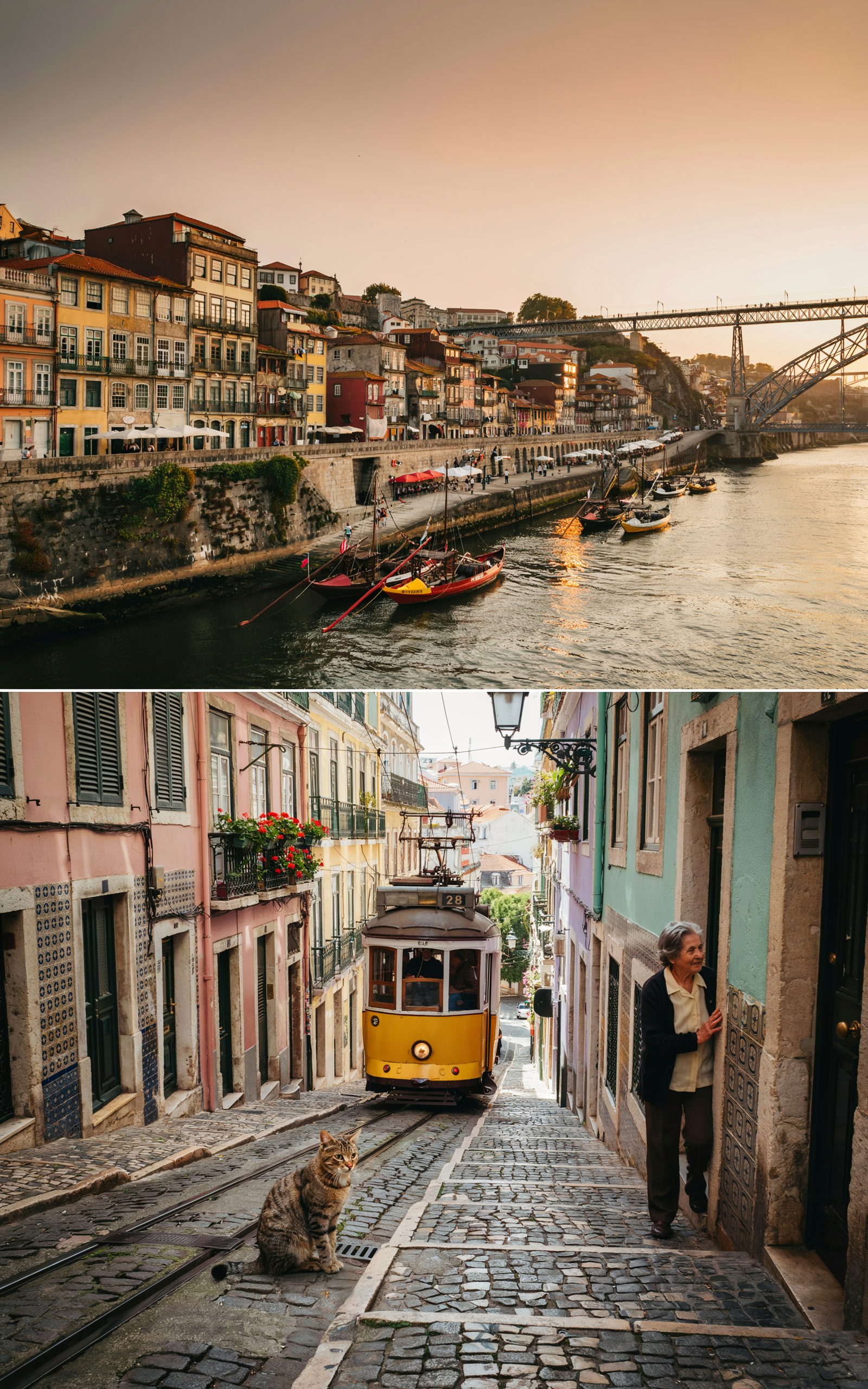
And then we took the train to Porto for a long weekend and I was like… wait. Why is this city so freaking beautiful and feel like it was made for me?

Here’s what I’ve learned after years of living in Portugal, traveling back and forth between these two cities: the Porto vs. Lisbon question doesn’t have one clean answer.
It depends on how many days you’ve got, what kind of trip you want, and whether you’re the type who’d rather stand at a miradouro with a coffee or sit on a riverside terrace with a glass of port.
I retired early at 42 thanks to investing and my Etsy print-on-demand side hustle, and that freedom is exactly why I’ve had the chance to get deep into both of these cities.
Not just as a tourist passing through, but as someone who actually lives here and keeps going back. So if you’re staring at a map of Portugal wondering where to fly into and where to spend your precious vacation days, this is the guide that’ll help you decide.
Both cities are worth your time. But one of them will probably steal your heart faster than the other.
The Quick Answer: Porto vs. Lisbon
If this is your first time in Portugal and you want the most versatile base, go to Lisbon. It has the bigger airport, the better public transit network, and the most epic day trip options within easy reach.
You can hit Sintra, Cascais, and even Évora without renting a car.
If you’ve got a long weekend and you want maximum atmosphere with minimum stress, go to Porto. It’s more compact, often a little cheaper, and the wine-meets-river energy is unlike anything else in Europe. You’ll fall for it fast like I did.
And if you can swing both? Do it.
A three-hour Alfa Pendular train ride connects the two cities, so splitting your trip is not only realistic, it’s my actual recommendation to anyone who asks. Two to three nights in Porto, three to five in Lisbon. That’s the sweet spot.
Getting There and Getting Around
Lisbon wins this category on sheer reach. Humberto Delgado Airport is the largest in Portugal, sitting just 7 km from the city center. You can be in Baixa within 20 minutes of landing if you grab a Bolt or Uber (roughly €10), and the metro connects the airport to all four metro lines.
The Lisbon Metro runs from about 6:30 a.m. to 1:00 a.m., and the real power move is the “Travelling all Lisboa 24-hour ticket” at €11.40, which covers metro, buses, trams, and CP commuter trains out to places like Sintra and Cascais.
Porto’s airport, Francisco Sá Carneiro, is a bit farther out at 11 km from center, but don’t let that scare you. The Line E metro takes you straight to Trindade in about 30 minutes, and it runs from 6:00 a.m. to 1:00 a.m.
Once you’re downtown, Porto’s metro system is actually one of the larger light-rail networks in Europe, covering about 70 km across 6 lines.
Campanhã station is the big multimodal hub where metro, train, and bus all connect, and from there, you’ve got easy access to day trips heading north toward Braga, Guimarães, and up the Douro Valley.
The trade-off is this: Lisbon’s transit system is broader, but the city itself is more spread out and fragmented by hills and neighborhood shifts.
Porto’s network is smaller, but you spend less time on it because the sightseeing core is tighter. Different kinds of ease.
Portugal vs. Lisbon: Costs
Porto is usually the cheaper city, sometimes significantly so.
An inexpensive restaurant meal averages about €12 in Porto and €13 in Lisbon. A mid-range dinner for two? Surprisingly close: roughly €50 in Porto and €45 in Lisbon, which is one of those rare moments where Porto doesn’t undercut the capital.
Taxis and rideshares are similarly priced in both cities, with start fees around €3.50 and per-km rates under €1.
And for luxury? Porto runs about €250 to €450 per person per day, with Lisbon pushing €280 to €500 and up.
Porto gives your wallet a little more breathing room at every level of travel.
Where to Stay in Lisbon
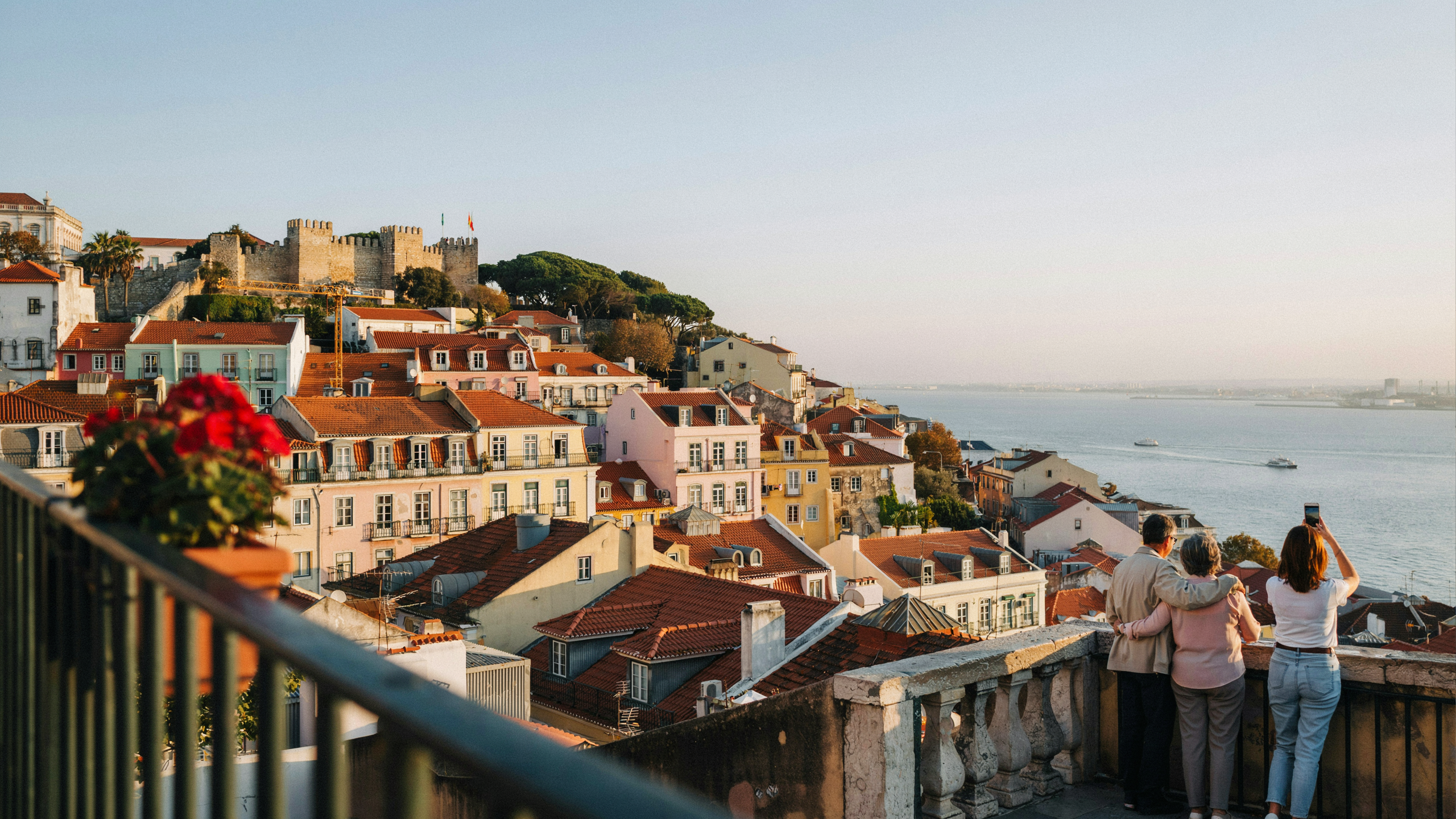
Lisbon’s neighborhoods are more distinct than Porto’s, which means your choice of base matters more. The two strongest first-time picks are Baixa and Chiado.
Baixa is the rebuilt Pombaline core, flat, walkable, rich in history, and connected to everything. Chiado is the upscale quarter right next to it, with better restaurants, better shopping, and a more polished energy. Together they cover most of what a first-timer needs.
Cais do Sodré is where I send friends who want nightlife, food halls, like Time Out Market and transit access all in one spot.

Pink Street is there, Mercado da Ribeira is there, and the train station connects you to Cascais and Belém without a car.
Príncipe Real is the stylish boutique neighborhood for people who care about where they eat brunch and want to walk past garden-lined mansions. And Avenida da Liberdade? That’s the luxury corridor, the one Lisbon actively markets as its “Luxury District.”
For families or anyone who needs flat, easy terrain, Parque das Nações in the eastern part of the city around the Oceanarium area is your best bet. Alfama is gorgeous, but it is cobbled, steep, and genuinely hard on strollers, knees, and anyone with mobility concerns.
If you’re looking for the best 5 star hotels in Lisbon, check out this article which gives you a deeper dive on where to stay in Lisbon.
And, if you are traveling with family, I absolutely recommend staying at the Martinhal Lisbon Oriente. It is the best luxury hotel for families with a kids club, baby concierge, spacious rooms, and more.
Where to Stay in Porto

Porto’s accommodation geography is simpler, and that’s actually a good thing for trip planning. The Historic District is the obvious first-time pick.
This is where the UNESCO World Heritage core lives: Ribeira, São Bento Station, Clérigos Tower, the Sé Cathedral. You’re walking distance from everything that makes Porto feel like Porto.
The Downtown/Baixa area is slightly younger and more energetic, especially at night. If you want to be close to the Galeria de Paris bar scene and still walk to all the main sights, this is it.
We stayed in a wonderful hotel called the Akeah Porto Centro with our two kids and it was perfectly located. It was a bit active at night, but my kids are good sleepers. Here is a review if you’re looking to stay in the center of it all.
Boavista is the smarter choice for travelers who want a quieter hotel district with bigger roads, easier parking, and proximity to Serralves and Casa da Música.
Foz do Douro and the Atlantic coastline are beautiful for a slower pace, beaches, and sunset walks, but you’ll spend more time commuting to the historic core.
The standout luxury hotel in Porto, and the one I keep recommending, is The Yeatman. It sits on the Gaia side of the river, every single room faces Porto across the Douro, and the two-Michelin-star restaurant is a destination in itself.
Each room is decorated by a different Portuguese winery, and the wine spa takes the concept of “wine hotel” further than anywhere else I’ve been.
I absolutely love staying on the Gaia side. If you do, check out the Forte de Gaia Autograph Hotel. It has a moody luxury vibe that is very unique. And, definitely go to The Rebello Hotel and Spa for rooftop drinks because the views are insane. I recommend reservations, or going when they first open for lunch. Here’s the view from their rooftop.

I’ve written a full guide to the best luxury hotels in Porto if you want the deep dive.
Culture: Monuments, Museums, and Fado
Lisbon is the deeper cultural city. Full stop. The Monastery of the Hieronymites and Tower of Belém are UNESCO World Heritage sites.
Beyond Belém, you’ve got Alfama for old-city atmosphere (just watch those cobbles), Chiado for the literary cafe scene, Baixa for the geometric Pombaline grid, and miradouros scattered all over the city that give you completely different views depending on which hill you’re standing on.
Miradouro da Graça alone is worth the walk.
Museum variety is strong: the National Tile Museum, the Gulbenkian, and dozens of smaller collections.
And fado is genuinely tied to this city. UNESCO specifically recognizes it as widely practiced here, and hearing it live in Alfama or Mouraria is one of those experiences that gets under your skin.
Porto’s cultural advantage is different. It’s about concentration. UNESCO recognizes the Historic Centre of Oporto, the Luiz I Bridge, and the Monastery of Serra do Pilar as a collective site, and walking through it feels like moving through one continuous architectural experience rather than hopping between scattered landmarks.

Palácio da Bolsa, São Bento Station with those blue-and-white azulejo murals, Clérigos Tower, the Sé Cathedral, and the two-level Luiz I Bridge all stack tightly around the river and the upper historic core.
Porto feels less museum-dense than Lisbon, but more visually unified as a cityscape.
For contemporary culture, Serralves is Portugal’s leading contemporary art museum, and Casa da Música by Rem Koolhaas is the kind of building that makes architecture nerds audibly gasp.
My read: choose Lisbon if you want to see more types of things. Choose Porto if you want to feel more.
Food, Wine, and Nightlife
Lisbon is the broader food city. Pastéis de nata and grilled sardines are the local icons, and the dining scene runs from old-school tascas to polished Michelin-starred rooms.
It also is home to some amazing burger joints.
At night, Bairro Alto is still the classic nightlife quarter, with bar after bar stacked on narrow streets that fill up after 10 p.m.
Cais do Sodré adds Pink Street, the Time Out Market at Mercado da Ribeira, and a different energy that skews more curated and more international. Lisbon’s nightlife is wider in geography and style, with rooftop bars, fado houses, clubs, and late dining spread across multiple neighborhoods.
If you are looking for the ultimate list of things to do while in Lisbon, this article can help you put together your itinerary.
Porto has the sharper culinary identity. It’s the identity that pulls harder on your memory after you’ve left.
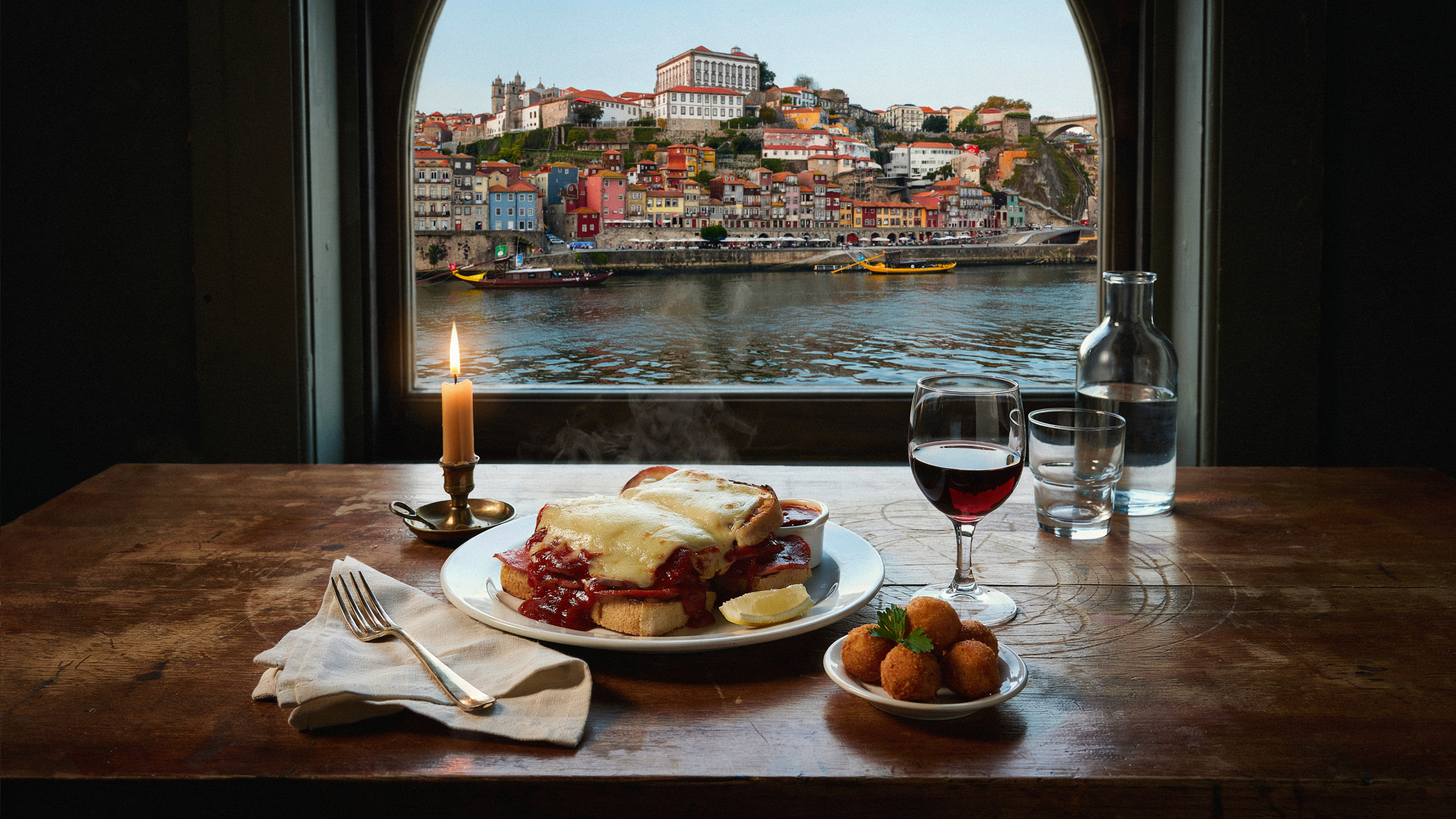
Francesinha is the signature dish, a layered meat sandwich drowned in beer-and-tomato sauce and covered in melted cheese that looks insane and tastes like everything good in the world.
Tripas à Moda do Porto (tripe stew, the city’s historic dish) and Bacalhau à Gomes de Sá round out the hits. But the real draw is port wine.
Port wine cellars are a core sight in Porto, not just a restaurant pairing. The Port and Douro Wines Institute regulates the two designations of origin, and the whole visitor experience around Gaia, WOW (World of Wine), and the riverside cellars makes wine tourism feel like part of the city’s actual geography, not a bolt-on experience.

I’ve got a full rundown of where to do port wine tasting in Porto if you want the specifics.
Porto’s nightlife is concentrated mainly around Baixa and the Galeria de Paris strip. It’s fun, it’s lively, but it’s not the multi-zone sprawl that Lisbon offers. If nightlife is a priority, Lisbon wins. If food-and-wine identity is your thing, Porto wins, and it’s not close.
If you are looking for a list of see in Porto, check out my guide that goes more into depth.
Day Trips: Where Each City Takes You
This is where Lisbon pulls away. The sheer variety of day trips from the capital is one of the strongest reasons to base yourself there.
The Sintra and Cascais combination is the headliner. Sintra is a full UNESCO monument-and-park destination in its own right, with Pena Palace, Quinta da Regaleira, and the Moorish Castle all wrapped in misty forest.
And Cascais is a quick coastal train ride from Cais do Sodré. One of the best ways to do it is on the Sintra and Cascais Day Tour with Pena Palace, which handles all the logistics and gets you into the gardens through a quieter entrance.
Beyond Sintra, Lisbon organizes easily as a launchpad for Évora (a UNESCO World Heritage city in the Alentejo), Óbidos, Ericeira, Nazaré, and Fátima, all doable as full-day guided tours. No car needed.
If you are a wine lover, a trip to Alentejo should be on your list. We did a daytrip to a luxury wine estate and it did not disappoint. Read more about our trip to Herdades das Grous here.
Porto’s day trips are fewer in number but freakishly good in quality. The Douro Valley is the standout, and it’s the kind of day trip that can change how you think about wine.
CP’s scenic MiraDouro train runs from Porto Campanhã along the river, and fares to Régua start at €10.70 one way.
But the absolute best way to do it if you don’t want to drive is a guided tour. The Complete Douro Valley Wine Tour with Lunch, Wine Tastings and River Cruise has over 17,000 reviews and includes two wineries, a traditional lunch, and a river cruise from Pinhão.
It’s one of the highest-rated experiences in all of Portugal for a reason. If you want something more intimate, the Douro Valley Small-Group Wine Tour with Lunch and River Cruise caps at eight people and is a more personal experience.

Beyond the Douro, Porto also connects easily to Braga (one of Europe’s oldest cities), Guimarães (the birthplace of Portugal), and Aveiro (canals, colorful boats, and ovos moles pastries). Check out my full list of day trips from Porto for the full breakdown.
If you want more variety in your excursions, Lisbon is the stronger base. If you want one absolutely jaw-dropping day trip (the Douro), Porto delivers it better than Lisbon delivers any single option.
Families, Accessibility, and Practical Stuff
Both cities are good for families, but Lisbon has the clearer purpose-built cluster.
The Oceanário de Lisboa is one of the best aquariums in Europe, and the area around it combines parks, the Pavilion of Knowledge science museum, a cable car, and wide riverside promenades all in one modern, flat district.
That’s a real win if you’re traveling with kids or anyone who doesn’t love cobblestones.
Porto’s family strengths are more distributed. Wonder Sense and Neonia are fun, interactive and child-friendly museums, Serralves Park is great for green space and workshops, and the Atlantic coastline adds beaches and long seafront walks.
Porto is also a smaller, more manageable city, which means less time on transit and more time actually doing things. For a deep dive on family-friendly stays, check out my guide to the best resorts in Portugal for families.
On accessibility, I’ll be real: old European cities are not easy for reduced-mobility travelers, and both Lisbon and Porto have genuine challenges.
Alfama in Lisbon and Ribeira in Porto are steep, cobbled, and uneven. Lisbon’s advantage is that it has more flat districts to choose from: Baixa, Parque das Nações (the eastern area near the Oceanarium), and Avenidas Novas are all significantly easier to navigate.
Porto has launched its Accessible Porto project and is actively working on improvements, but the heritage slopes between the historic center and Gaia remain hard going.
Both Portuguese airports offer ANA’s MyWay assistance for reduced-mobility travelers, and Lisbon’s metro has wide gates and ongoing lift-accessibility improvements.
Safety
Portugal is safe. Both cities are safe. The U.S. State Department calls Portugal a generally safe destination, and UK and Canadian travel advisories echo that assessment. I moved here because Portugal is one of the safest countries in the world.
Crime rates are low, but petty theft, especially pickpocketing, is common in crowded tourist areas and on public transit. Porto has a dedicated Tourism Police unit and official materials that actively promote its safety record.
The practical advice is the same for both cities: keep your phone and wallet in a front pocket, be aware in nightlife zones and at viewpoints, and don’t leave bags unattended at cafe tables. You’re going to be fine.
Climate and When to Go
This is one of the biggest practical differences. Lisbon gets around 290 days of sunshine a year, and its seasonal averages run warmer and drier than Porto’s. Porto is cooler and wetter, especially in winter, though still mild by broader European standards.
May to June and September to October are the sweet spots for both cities. But Porto benefits more from shoulder-season timing because rain genuinely affects the sightseeing experience there in a way it doesn’t in Lisbon.
If you’re going in November through February, Lisbon is the more reliable pick. If you’re going in summer, both cities are hot and lively, but Porto will feel a few degrees more bearable, and the Atlantic breeze in Foz is a real gift.
Lisbon is easier to recommend year-round. Porto rewards you most when you time it right.
How Many Days Do You Need?
This depends less on how much there is to see and more on how you want to move. Porto’s compactness means it overperforms on a long weekend. Three days in Porto will get you through Ribeira, Baixa, São Bento, Clérigos, a wine cellar visit, and either Boavista or Foz without feeling rushed.
Give it five days and you can add a Douro excursion plus a day trip to Braga or Guimarães. Seven days or more turns Porto into a slow travel base for northern Portugal, especially if you add a Douro overnight.
Lisbon wants a little more time because its pull is regional, not just urban. Two to three nights works for a focused city-only hit: Baixa, Chiado, Belém, and one nighttime neighborhood.
Three to five days opens up a full Sintra day and a Cascais afternoon.
Seven days or more lets you add Évora, the Óbidos-Nazaré-Fátima triangle, and a proper beach day, and you still won’t feel like you rushed.
Porto vs. Lisbon: The Final Verdict
Choose Lisbon if you’re a first-time Portugal visitor, if you want the stronger all-round base, if you care about nightlife variety and cultural breadth, or if day trips to multiple regions are part of your plan. Lisbon is the better base and broader traveler city.
Choose Porto if you want a shorter, moodier, more intimate city break, if you’re after better value accommodation, or if wine-and-river energy is your idea of a perfect trip. Porto is the better short-break city and the more immediately atmospheric one.
My honest recommendation, and the one I give to basically everyone who asks me, is to do both.
Two to three nights in Porto, three to five in Lisbon. The rail link between them takes under three hours, and the two cities are different enough that splitting the trip doesn’t feel repetitive. It feels like getting two completely different Portugals in one go.
If I had to pick one sentence: Lisbon is the better base, Porto is the better vibe.
Planning More Than Just a Hotel Stay?
If you’re building a Lisbon itinerary, I keep a running list of my favorite things to do in Lisbon. Start there once your hotel is booked.
I also have a guide to the best brunch spots in Lisbon, best burgers in Lisbon, and an honest take on the Lisbon tuk tuk experience if you want to hit the cobbled neighborhoods without walking every hill on foot.
Adding Porto to Your Trip?
I’ve written a full guide to the best luxury hotels in Porto if you want to keep the five-star streak going up north.
Then check out my list of things to see in Porto and my honest take on how many days you actually need in Porto before you commit to a split itinerary.
And once you do, here is a 3-day itinerary for Porto to help you plan. Porto’s food scene is one of the best parts, so definitely read my Porto food guide before you go.
Heading South to the Algarve?
A Lisbon-then-Algarve itinerary is how I first explored Portugal and then fell in love and moved here. The south coast gives you golden cliffs, beach days, and resort life that feels nothing like the city.
Vila Vita Parc is the clifftop icon where we celebrated my early retirement, complete with a two-Michelin-star restaurant and a Sisley spa carved out like a sea cave.
Another top-tier luxury resort is Martinhal Sagres, its barefoot, family-first counterpart at the wild western tip of the coast.
And if you’re still mapping out where in the country to base yourself, my roundup of the best luxury hotels in Portugal covers every region worth staying in, and the best luxury wellness retreats in Portugal has you covered if your trip is more about resetting than sightseeing.
One last thing before you book those flights: if you’re flying TAP Air Portugal and debating the business class upgrade, read my honest TAP business class review first.
Final Thoughts
The Porto vs. Lisbon debate is real, but it’s also kind of a beautiful problem to have. You’re choosing between two cities that are both walkable, both affordable by European standards, both absolutely loaded with good food and better wine, and both within three hours of each other by train.
Most people who visit one end up going back for the other. And most people who live here, myself included, end up with a permanently divided heart.
You’re going to love whichever one you pick. But if you can do both, do both. Portugal is small enough to make it work, and generous enough to make it worth it.
Portugal Travel Planning Guide
🚑 Should I buy travel insurance for Portugal?
It is strongly recommended. Non residents do not automatically receive free public healthcare, although private healthcare is available. Travel insurance covers emergencies, delays, and medical visits. If you require a Schengen visa, insurance is mandatory. Visitors Coverage is a highly trusted and recommended choice.
💳 Will my debit card or credit card work in Portugal, and do I need cash?
Most major credit and debit cards work in Portugal, including Visa, Mastercard, and many travel cards from US and UK banks. Some smaller cafés, markets, and rural spots still prefer cash, so carry a little on hand. For ATM withdrawals and currency exchange, use a Wise card. Wise usually provides better exchange rates than traditional banks and is widely accepted at Portuguese ATMs and anywhere debit and credit cards are accepted.
📲 Will my phone work in Portugal?
Many major carriers offer roaming plans, but costs vary. For affordable data, purchase a local SIM from Vodafone or MEO or use an eSIM like Airalo. Public wifi exists but is not always reliable, so a local data plan is ideal.
🚙💨 Is it safe to rent a car in Portugal?
Yes. Renting a car is one of the best ways to explore Portugal. Roads are well maintained. Expect toll highways and narrow streets in older villages. Automatic cars are limited, so book early. I recommend using Discover Cars to find the most reputable rental car company. Just filter for the company with the best reviews.
💧 Can you drink tap water in Portugal?
Yes. Tap water is safe throughout Lisbon, Porto, the Algarve, and most populated regions. In remote rural areas water systems may vary, so check locally if you are unsure. Many visitors prefer a filtered bottle because the mineral taste can be stronger in some areas, though generally safe.
🏩 Best way to book accommodations in Portugal
I use Booking.com and Hotels.com for hotels. Mostly Hotels.com because I love a rewards program! For unforgettable, luxury stays, I highly recommend Plum Guide for your stay. VRBO also works incredibly well for luxury stays, especially for families.
✈️ Best site to search for flights to Portugal
Skyscanner and Google Flights provide reliable fare tracking for Lisbon, Porto, and Faro. Prices vary significantly by season, with summer being the highest.
🎫 Do I need a visa for Portugal?
US and UK passport holders can generally visit Portugal visa-free for up to 90 days in any 180-day period across the Schengen Area. Requirements for longer stays depend on your nationality and circumstances.
📌 Share on Pinterest
If this guide helped you figure out the Porto vs Lisbon question, save it for later! Pin the image below to your Portugal travel board so you can come back to it when you’re ready to book.